
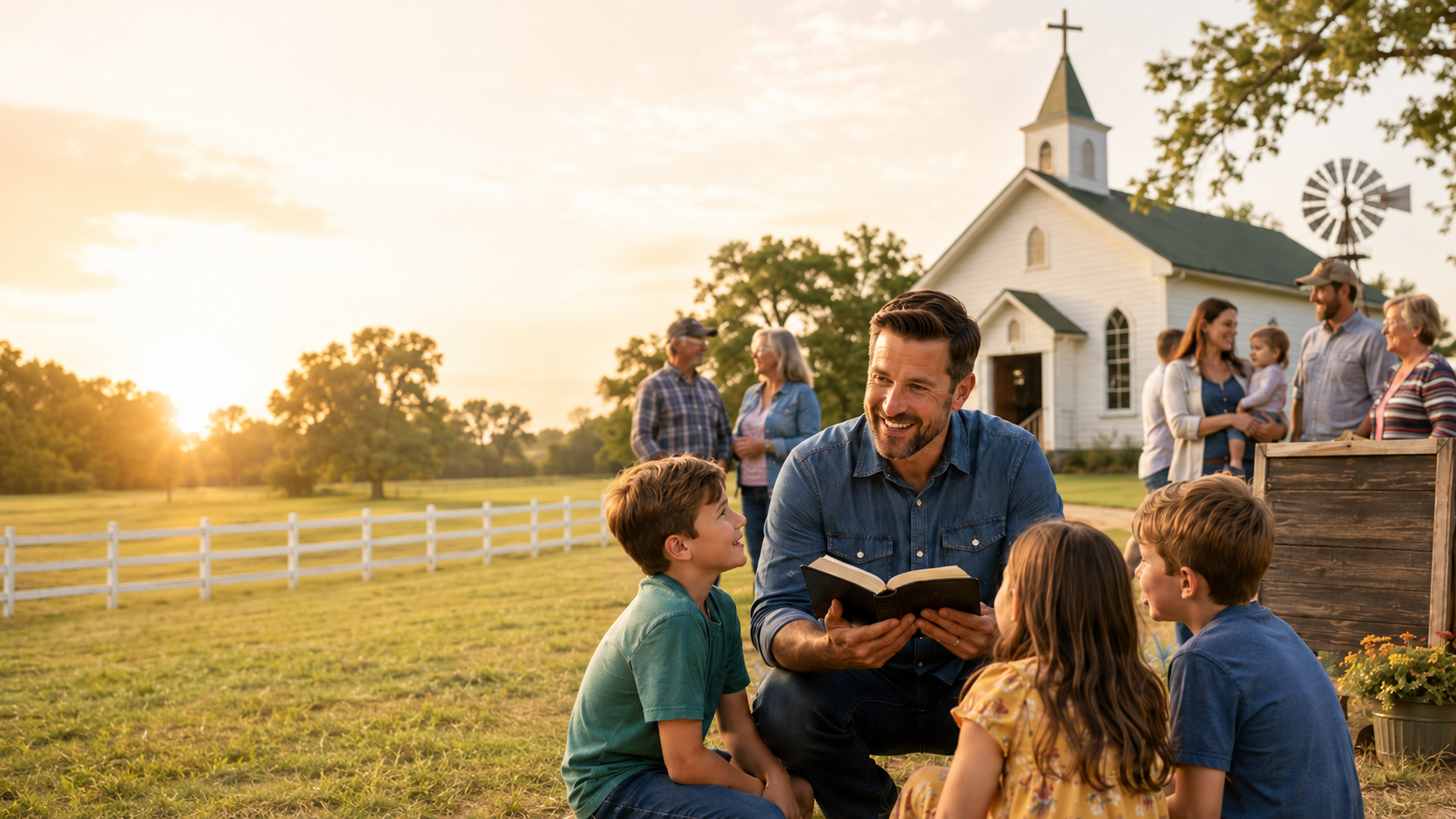
Why Children’s Pastors make excellent Rural Pastors

When people think about the kind of pastor who can thrive in a rural church, they often imagine someone who can preach, visit, lead, repair, organize, encourage, and somehow still remember every kid’s name. Rural ministry is relational, hands-on, flexible, and deeply personal. Interestingly, those are the very qualities many children’s pastors have been developing for years.
Children’s pastors often make excellent rural pastors because they have learned how to shepherd people with patience, creativity, humility, and love.
A children’s pastor understands that ministry is not just about delivering information. It is about helping people take their next steps with God. Jesus said, “Let the little children come to me” (Matthew 19:14). That statement reveals the heart of ministry. People are not interruptions to the mission; people are the mission. Children’s pastors know this well. They have spent years getting down on a child’s level, explaining the truth clearly, and making sure every person feels seen.
That skill dovetails perfectly into rural church life. In a rural congregation, the pastor is not distant or untouchable. The pastor is often part preacher, counselor, encourager, neighbor, and friend. A rural pastor must know how to communicate the gospel in a way that is understandable, personal, and practical. Children’s pastors are trained to do exactly that.
Children’s pastors also know how to work with limited resources. Many children’s ministries do not have massive budgets, large teams, or endless supplies. Children’s pastors learn to be creative with what they have. They can turn a simple object lesson into a memorable spiritual truth. They can organize volunteers, stretch a budget, and create meaningful ministry without needing everything to be perfect.
That matters in rural ministry. Rural churches often need pastors who are willing to be resourceful and not judgmental when looking at whatever resources are available locally. The Apostle Paul wrote, “I have learned the secret of being content in any and every situation” (Philippians 4:12). Children’s pastors understand that fruitful ministry does not depend on having the biggest building, the newest technology, or the largest staff. Fruitful ministry depends on faithfulness, prayer, love, and obedience to God.
Another reason children’s pastors make strong rural pastors is that they are good at building teams. Children’s ministry cannot function without volunteers. A children’s pastor must regularly recruit, train, encourage, correct, and appreciate people. They learn how to see gifts in others and invite them into ministry.
Rural pastors must equip the saints, not do all the ministry alone. Ephesians 4:11-12 teaches that pastors are given “to equip his people for works of service, so that the body of Christ may be built up.” A children’s pastor already understands that the church is healthiest when everyone has a place to serve.
Children’s pastors also tend to have a strong heart for families. They know that ministry to children is also ministry to parents, grandparents, guardians, and the whole church community, many times from the cradle to the grave. In rural churches, family connections often run deep. Generations may worship together in the same congregation. A pastor who understands children and families can minister across age groups with wisdom, compassion, and respect.
This intergenerational mindset is powerful. Psalm 78:4 says, “We will tell the next generation the praiseworthy deeds of the Lord.” Rural churches need pastors who value the older saints who built the church and the younger generations who will carry the faith forward. Children’s pastors often know how to reach back in time to honor tradition while reaching forward toward vision for the future with the next generation in mind.
Perhaps most importantly, children’s pastors are used to measuring success in quiet, long-term moments. They know that spiritual growth often happens slowly, even incrementally. A child may hear the same truth many times before it takes root. Seeds are planted, watered, and entrusted to God. Rural ministry is much the same. Growth may not always be fast or flashy, but it can be deep, faithful, and lasting.
Children’s Pastors always have to be busy working on multiple things in order to make the kids’ ministry thrive. They are masterful when it comes to making something out of nothing or very little. They have to know a little about sound, a little about video editing, on top of preaching, teaching, entertainment, food production and prep, ordering ingredients, curriculum, music, custodial skills, and the ability to order a diverse range of random supplies in bulk. Rural churches often need leaders with the same skill sets.
Paul wrote, “I planted the seed, Apollos watered it, but God has been making it grow” (1 Corinthians 3:6). That is the heartbeat of both children’s ministry and rural ministry. The pastor is faithful, but God brings the growth. Children’s Pastors do not care who gets the credit. All they care about is that people were ministered to. This is also an excellent quality in a rural Lead Pastor. Most rural communities serve humble, decent blue-collar working-class people. The children’s Pastor is relatable as the reality of wearing many hats and the work ethic of a children’s pastor mirrors the work ethic and entrepreneurialism of rural America in many cases.
Children’s pastors make excellent rural pastors because they are shepherds at heart. They know how to teach simply, love patiently, serve humbly, and lead creatively. They understand that no person is too small, no church is too rural, and no act of faithfulness is wasted in the kingdom of God.
Maybe the best next step for a Children’s Pastor is a rural church in America.